 The Lingling-o: History, Interpretation, and the Search for Evidence
  The Kankana-ey Calendar: A Timeless Symphony of Nature and Culture
  Igorots: The so-called savages of the Cordilleras
  Od-odio, the Narra Tree Song
  Baguio Creatives finding ways to rise above Pandemic
  Baguio City Creative Christmas Trees
  How a wooden spoon started a creative village
  The Sagada Way
  The Mountain Trail Thrill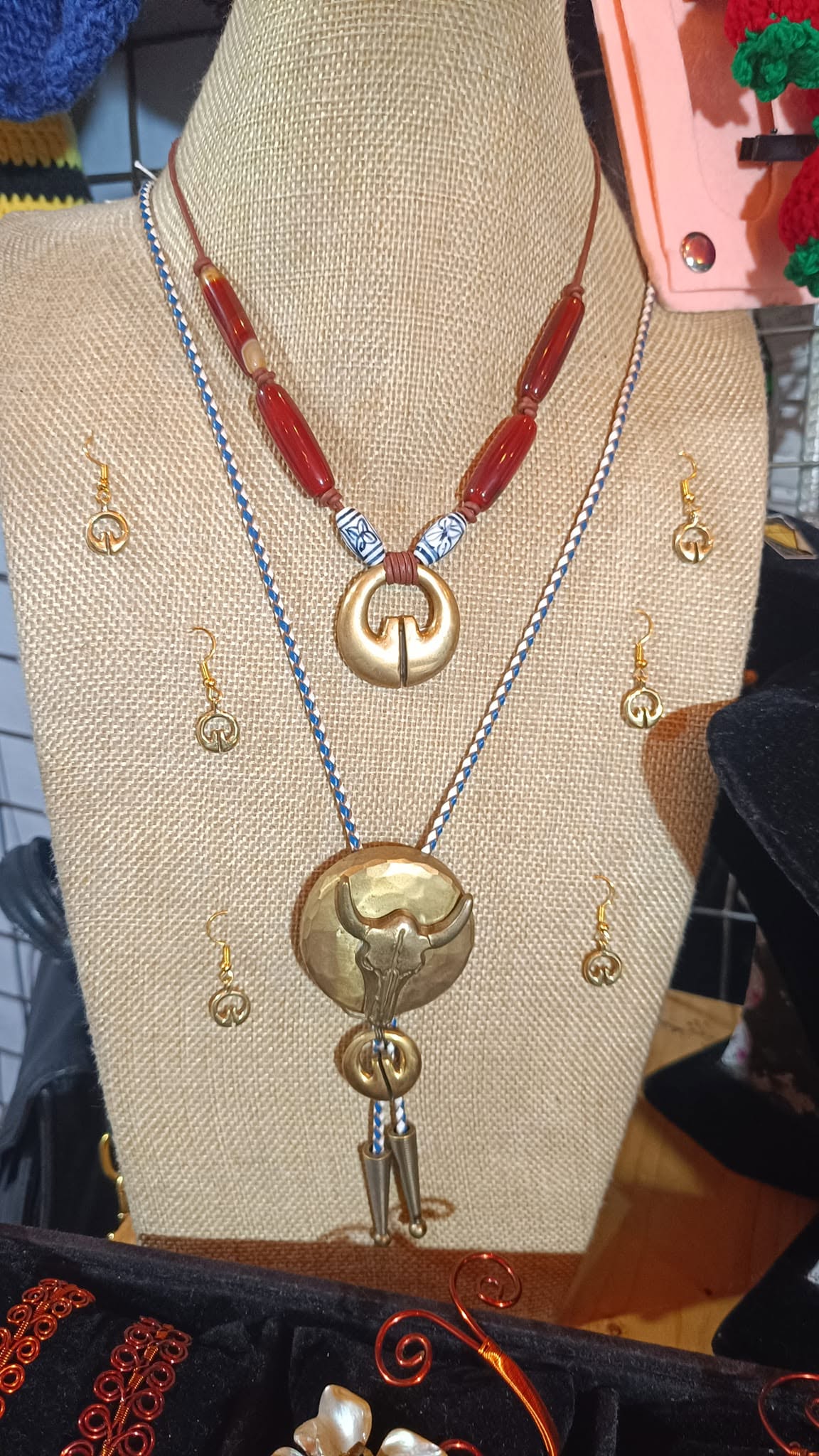
“Why I Don’t Call It a Fertility Symbol”
As a tour guide, one of the questions I am most often asked is, “What does the lingling-o symbolize?” These days, many visitors expect the answer that it represents fertility, the womb, or the union of the masculine and feminine. I even recall an Indian artist comparing it to the lingam in Hindu tradition. While I respect these interpretations, I usually stop short of presenting them as historical fact.
The reason is that I never heard that explanation growing up in the Cordillera.
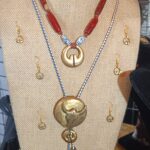
For many years, I knew the lingling-o as an ancient ornament, a symbol of identity, craftsmanship, and our connection to our ancestors. It was called “wising” among us Kankanaey, “lubay” among the Kalinga, “shengsheng” among the Bontok, and “lingling-o” among the Ifugao. It appeared in jewelry, woodcarvings, tattoos, and cultural presentations. Yet never once did I hear elders describe it as representing the womb, fertility, or the female reproductive system. It was only sometime in the early 2000s that I began hearing this explanation.
Today, that interpretation has become commonplace. It appears in museum exhibits, souvenir brochures, cultural presentations, social media posts, and countless websites. Naturally, I became curious. Where did this explanation originate? Was it truly an ancient belief preserved through generations, or was it a modern interpretation that gradually came to be accepted as historical truth?
The more I researched, the more questions emerged.
The earliest archaeologists who studied the lingling-o focused on its age, craftsmanship, materials, and distribution across Southeast Asia. They described it as one of the remarkable artifacts demonstrating extensive prehistoric trade networks connecting Taiwan, the Philippines, Vietnam, and beyond. Yet nowhere in the early archaeological literature did I find it described as a fertility symbol.
Likewise, I have yet to encounter an early ethnographic account in which Cordilleran elders explained the “wising” or “lubay” as representing the female reproductive system. If such symbolism had been central to its meaning, one might reasonably expect it to have been recorded alongside other indigenous beliefs and traditions.
Based on my research so far, the earliest published source I have found that explicitly interprets the lingling-o as a fertility symbol is “Philippine Ancestral Gold” by Asuncion L. Maramba and Hiroshi Yoshihara (Bangko Sentral ng Pilipinas, 1998). In that work, the ornament’s form is interpreted as an abstraction of the female reproductive system. Since then, this interpretation has been repeated in museum exhibits, heritage publications, educational materials, and popular articles until it gradually became the explanation most people recognize today.
To me, this suggests that the explanation is better understood as an artistic or scholarly interpretation than as a conclusion established by archaeology or documented indigenous tradition.
This does not necessarily mean the interpretation is incorrect. It may well be a thoughtful and plausible reading of the ornament’s form. But there is an important distinction between interpretation and documented history.
History is strongest when it rests on evidence. When something comes from archaeology, we should identify it as archaeology. When it comes from oral tradition, we should identify it as oral tradition. And when it is a modern scholarly interpretation, we should be equally transparent. Interpretation enriches our understanding, but it should not quietly replace historical evidence.
As a tour guide, a writer, and a designer of jewelry inspired by Cordilleran heritage, I believe visitors deserve that honesty.
The lingling-o does not need an invented story to inspire wonder. Its documented history is already extraordinary. More than two thousand years ago, skilled artisans fashioned these ornaments from prized nephrite jade and traded them across islands and seas, creating one of the oldest known exchange networks in Southeast Asia. Even more remarkable is that while the ornament disappeared from many places, its design survived in the Cordillera, where it continues to be known by indigenous names and remains part of our cultural identity.
That story alone is worth telling.
Perhaps future archaeological discoveries or forgotten ethnographic records will one day provide convincing evidence that the lingling-o was indeed associated with fertility in ancient times. If such evidence emerges, I will gladly revise what I tell my guests. Good history is never afraid of new discoveries.
Until then, I choose to present the fertility explanation for what it currently appears to be: a modern interpretation rather than an established historical fact.
As guides, educators, writers, and storytellers, we have a responsibility not only to preserve our heritage but also to preserve the integrity of the stories we tell. Sometimes the most respectful answer we can give is also the most honest:
“We do not yet know exactly what the lingling-o meant to the people who first created it.”
Perhaps that mystery is part of its enduring beauty. Not every question from the past comes with a complete answer, and there is wisdom in resisting the temptation to replace uncertainty with certainty.
The lingling-o is not the only example. Today, the “bulol” is almost universally described as a “rice god,” yet that label oversimplifies a tradition that is far richer and more complex than a single phrase can capture. Like the lingling-o, its story deserves to be explored with the same care, curiosity, and respect for evidence. – CCT
But that is a story for another day.