 The Lingling-o: History, Interpretation, and the Search for Evidence
  The Kankana-ey Calendar: A Timeless Symphony of Nature and Culture
 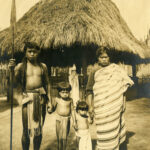 Igorots: The so-called savages of the Cordilleras
  Od-odio, the Narra Tree Song
  Baguio Creatives finding ways to rise above Pandemic
  Baguio City Creative Christmas Trees
  How a wooden spoon started a creative village
  The Sagada Way
  The Mountain Trail Thrill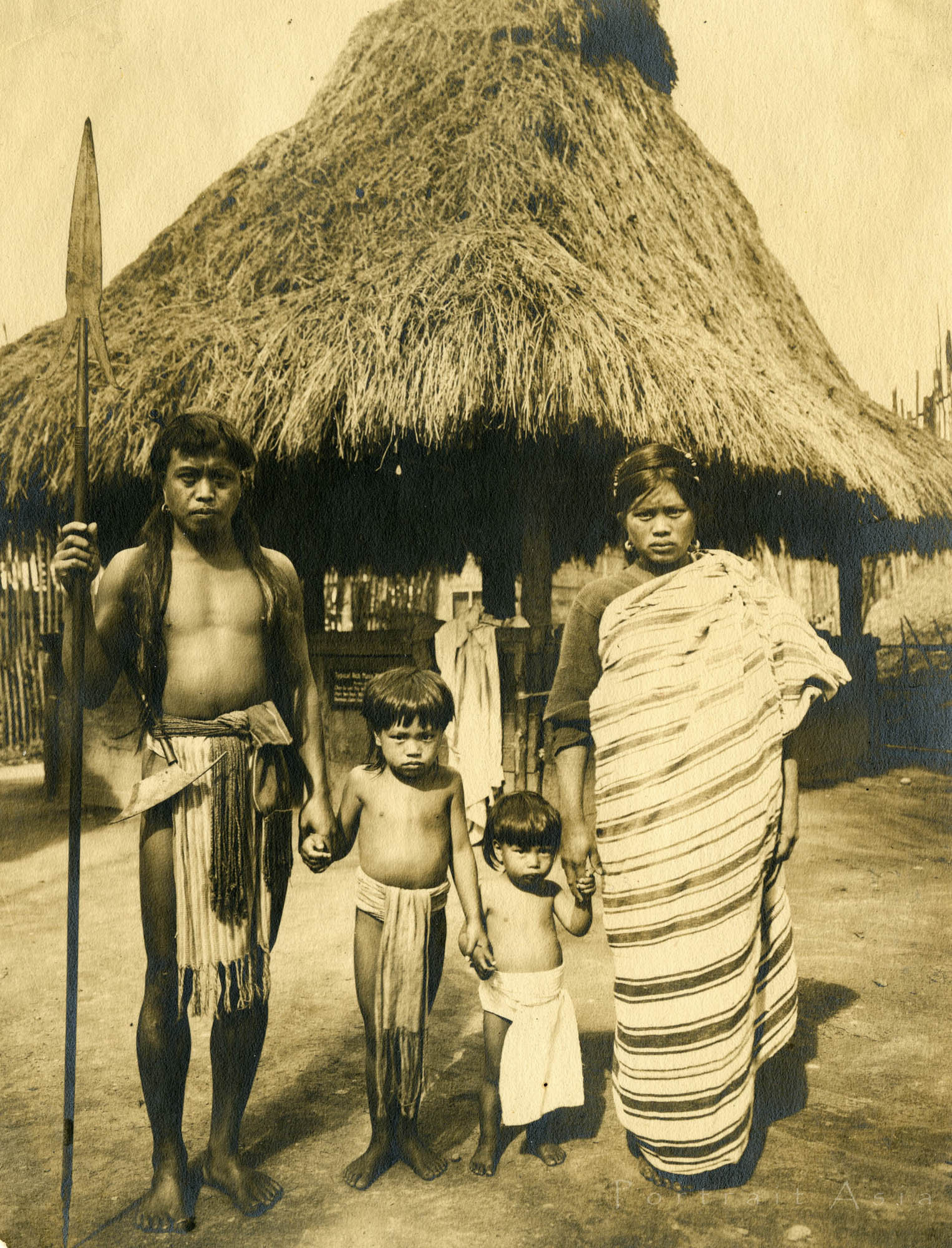
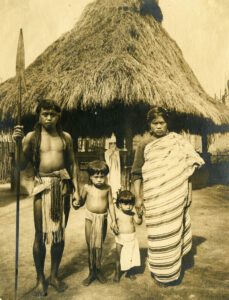
In 1904, the United States showcased the Philippines at the Saint Louis World’s Fair, one of the largest international expositions of its time. Occupying nearly twenty hectares, the Philippine Exposition featured reconstructed villages inhabited by about 1,200 Filipinos representing different ethnolinguistic groups. Among those exhibited were the people whom Americans called the Igorots.
To millions of visitors, the Igorots were presented as primitive “savages,” “headhunters,” and “dog-eaters” to justify America’s newly acquired colonial rule over the Philippines. Their homes, customs, and daily lives were turned into public spectacles, reducing an entire people to objects of curiosity and entertainment.
The irony was unmistakable. While the fair claimed to demonstrate the superiority of Western civilization, the very act of displaying human beings exposed the prejudice and dehumanization of the colonial powers. The exhibition revealed far more about the attitudes of the colonizers than about the civilization of the people they sought to portray.
Yet the people exhibited in Saint Louis belonged to societies that had long governed themselves, cultivated one of the world’s greatest agricultural landscapes, protected their forests and watersheds, and maintained systems of justice and diplomacy centuries before colonial rule reached the Cordillera.
American colonial writers often likened the Igorots to the Native Americans, portraying them as “savages,” “headhunters,” and “dog-eaters.” Such descriptions became part of colonial propaganda used to justify conquest and a so-called civilizing mission. Like the Indigenous peoples of North America, however, the peoples of the Cordillera were far more sophisticated than these stereotypes suggested.
The Saint Louis World’s Fair was not the first time Igorots had been treated this way. In 1887, Filipino physician, writer, and nationalist Dr. José Rizal visited the Exposición General de las Islas Filipinas in Madrid, where Igorots and other Filipinos were displayed as living exhibits. Distressed by the poor health of the Igorot exhibits and the ridicule they suffered from spectators, Rizal condemned the degrading treatment of his fellow Filipinos. Both Madrid and Saint Louis demonstrated a painful irony: those claiming to represent civilization were willing to reduce fellow human beings into spectacles for public amusement.
A Society Built on Balance
Long before Spain or the United States entered the Cordillera, the Igorots had established thriving communities throughout the mountains. They carved rice terraces that continue to astonish the world, practiced metallurgy, mined and traded gold, cultivated rice and root crops, hunted wild game, and exchanged goods with neighboring communities.
While occasional conflicts arose among villages, peace was the norm rather than the exception. Across the Cordillera, Indigenous communities developed customary laws that governed social relationships, property rights, marriage, inheritance, and justice. Among the Kalinga, this system became known as the budong or peace pact. Other Cordillera peoples maintained comparable institutions under different names, but all shared the same principle: disputes should first be resolved through dialogue, compensation, and reconciliation before violence was considered.
These systems reflected organized societies governed not by written constitutions but by respected elders whose authority rested on wisdom, experience, and community trust.
The Budong: Indigenous Diplomacy
The budong remains one of the finest examples of Indigenous diplomacy in the Philippines.
Each community maintained its own council of elders. When disputes arose between villages, the elders and peace pact holders met to investigate the matter and negotiate a settlement. Compensation often came in the form of livestock, heirlooms, gold, or other valuable property. Only when negotiations failed was warfare considered.
Contrary to popular imagination, warfare was not celebrated. It disrupted agriculture, endangered families, and cost the lives of able-bodied warriors. Headhunting was neither random nor indiscriminate. It existed within strict cultural rules and generally followed the collapse of peace agreements or cycles of revenge. Oral traditions across the Cordillera suggest that women, children, and noncombatants were generally spared, while those who violated accepted customs faced severe social condemnation.
This was not lawlessness. It was a legal system operating according to Indigenous principles.
Living in Harmony with Nature
Traditional Igorot society rested upon a simple but profound understanding: human survival depended upon the health of the land.
Families cultivated rice fields, raised livestock, and worked collectively during planting and harvest. Entire communities synchronized agricultural activities because they understood that cooperation reduced pest damage and improved harvests.
Modern ecology explains what earlier generations expressed through tradition. Rodents multiply when food is abundant. When every farmer plants simultaneously, food sources are spread across large areas, preventing rats from devastating any single field. A farmer who planted too early or too late would often suffer heavier losses because his field became the only available food source.
Traditional beliefs attributed these consequences to the guidance of Kabunyan. Today science recognizes the same practice as an effective ecological strategy.
Forests were managed with equal wisdom. Among the Ifugao, the muyong system protected forests above the rice terraces, ensuring a continuous water supply while preserving biodiversity. Similar watershed protection systems existed throughout the Cordillera.
The forests were also regarded as sacred places inhabited by ancestral spirits and anitos. Such beliefs discouraged unnecessary cutting of trees and overhunting. Timber was harvested only for homes, granaries, and fuel, while wildlife was hunted primarily for food and ritual purposes.
What conservationists now call sustainable resource management had long been practiced through Indigenous knowledge.
Wealth Beyond Money
Before colonial rule, wealth was measured less by currency than by one’s ability to sustain family and community. Productive rice fields, healthy livestock, abundant harvests, and generosity during community feasts reflected prosperity.
The introduction of a cash economy gradually transformed these values. Money replaced barter, and wage labor increasingly replaced subsistence farming. Colonial governments opened the Cordillera to commercial mining and large-scale logging, leading to levels of resource extraction unimaginable in earlier generations.
Within only a few decades, commercial logging consumed more timber than Indigenous communities would likely have used over centuries.
Economic opportunities also encouraged migration. Many families left agriculture for employment in mines, government offices, and cities. While these changes brought education, infrastructure, and new opportunities, they also weakened traditional institutions that had maintained social and environmental balance.
Changing Social Values
Like all societies, the Igorots were not without flaws. Tribal conflicts occurred, and customary justice sometimes involved violence. Yet colonial writers often exaggerated these practices while overlooking the violence committed during colonial conquest itself.
Historical records describe military campaigns that burned villages, destroyed crops, confiscated property, and forcibly relocated communities. Such acts rarely appeared in colonial accounts that portrayed Indigenous resistance as proof of savagery.
Traditional Cordillera societies also maintained social norms unfamiliar to Western observers. Courtship, marriage, inheritance, and communal responsibilities were governed by customary law. Men and women often bathed together in rivers without the moral judgments imposed by Victorian society. Concepts of modesty existed but differed from European standards.
Ironically, many of the people labeled as uncivilized possessed systems of governance, diplomacy, and environmental ethics that modern societies continue to recognize as valuable.
Citizens of the World
Should the West alone be blamed for the transformation of Igorot society?
The answer is both yes and no.
Colonialism undoubtedly accelerated changes that weakened many Indigenous institutions. The introduction of commercial extraction, centralized government, and new economic systems reshaped both the landscape and the culture of the Cordillera.
Yet change itself is inevitable. Every civilization evolves.
The challenge today is therefore not to reject modernity but to carry forward the wisdom of the ancestors while embracing the knowledge and opportunities of the present.
Traditional Igorot beliefs should not remain museum pieces or colorful performances reserved for festivals. They deserve serious study because many contain ecological, agricultural, legal, and social principles that remain remarkably relevant in the twenty-first century.
An Igorot who understands both Indigenous knowledge and modern science possesses a unique advantage. Such a person carries the wisdom of the mountains while navigating an increasingly interconnected world.
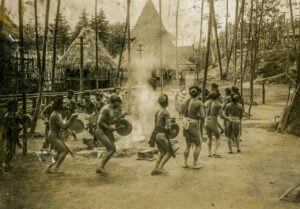
Perhaps the greatest lesson of history is this: the ancestors of the Cordillera were never as uncivilized as colonial narratives claimed. Their societies were imperfect, as every human society has been, but they demonstrated systems of governance, diplomacy, environmental stewardship, and communal responsibility that deserve recognition rather than ridicule.
The world’s fairs in Madrid and Saint Louis sought to convince audiences that the Igorots represented humanity’s primitive past. More than a century later, history invites us to ask a different question.
Who, in the end, was truly civilized?